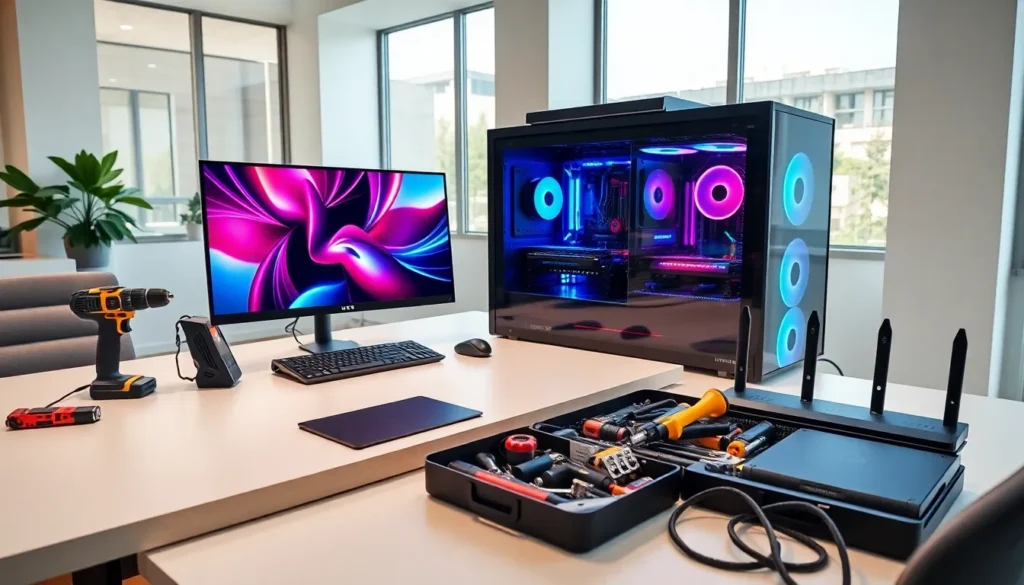
Finding the best hardware matters more than ever in 2025. Whether someone builds a PC, upgrades a home network, or tackles a DIY project, the right components make a real difference. Hardware choices affect performance, durability, and overall satisfaction with any project.
This guide covers the best hardware across multiple categories. Readers will find recommendations for computing, home improvement, networking, and gaming. Each section highlights products and features worth considering this year. The goal is simple: help people make informed decisions and get solid value for their money.
Table of Contents
ToggleKey Takeaways
- The best hardware in 2025 spans PC components, home improvement tools, networking devices, and gaming peripherals—each requiring careful selection based on your specific needs.
- For PC builds, prioritize AMD Ryzen 9000 or Intel 15th-gen processors, DDR5 RAM at 6000 MHz+, and NVMe Gen 5 SSDs for optimal performance.
- Wi-Fi 7 routers and mesh systems represent the best hardware for fast, reliable home networking with speeds exceeding 30 Gbps.
- Quality power tools from DeWalt, Milwaukee, or Makita combined with stainless steel fasteners deliver durability and better results for home projects.
- Always match hardware to your actual use case and budget—overspending on premium components or underspending on cheap alternatives both lead to poor value.
- Plan for the future by choosing upgradable components that meet tomorrow’s demands, not just today’s requirements.
Computing and PC Hardware
The best hardware for PC builds in 2025 starts with the processor. AMD’s Ryzen 9000 series and Intel’s 15th-gen Core processors lead the pack. Both offer excellent single-core and multi-core performance. Gamers and content creators benefit from either choice.
Graphics cards remain a crucial component. NVIDIA’s RTX 50-series delivers impressive ray tracing and AI-powered features. AMD’s Radeon RX 8000 cards provide strong competition at various price points. Budget-conscious builders can still find value in previous-generation GPUs.
RAM has become faster and more affordable. DDR5 memory now dominates new builds. Look for kits rated at 6000 MHz or higher for optimal performance. Most users need 32GB for gaming and productivity work.
Storage options continue to improve. NVMe Gen 5 SSDs offer read speeds exceeding 12,000 MB/s. A 2TB drive provides ample space for games, applications, and media files. Many builders add a secondary drive for additional storage.
Power supplies deserve attention too. The best hardware setups need reliable power delivery. An 850W or 1000W unit with 80+ Gold certification handles most high-end configurations.
Home Improvement Hardware Essentials
Home improvement projects require dependable hardware. Quality tools and materials lead to better results and fewer frustrations.
Power tools top most shopping lists. Cordless drills from DeWalt, Milwaukee, and Makita offer excellent battery life and torque. A good drill handles everything from hanging shelves to assembling furniture. Impact drivers make quick work of driving screws into tough materials.
Hand tools remain essential. Every homeowner needs a solid hammer, adjustable wrenches, and a complete screwdriver set. Quality pliers and wire cutters prove useful for electrical and general repairs.
Fasteners and mounting hardware vary widely in quality. Stainless steel screws resist rust and last longer than basic alternatives. Wall anchors rated for specific weights prevent accidents and damage. Hinges and drawer slides from reputable brands operate smoothly for years.
Safety equipment belongs in every toolkit. Safety glasses protect eyes from debris. Work gloves prevent cuts and blisters. A good dust mask matters during sanding and cutting operations.
The best hardware for home projects balances quality with cost. Investing in better tools often saves money over time through durability and performance.
Networking and Connectivity Devices
Fast, reliable internet requires the best hardware for networking. Outdated routers and cables create bottlenecks that slow everything down.
Wi-Fi 7 routers represent the current standard for high-performance wireless networks. These devices support speeds exceeding 30 Gbps in ideal conditions. Multi-link operation reduces latency for gaming and video calls. Brands like ASUS, Netgear, and TP-Link offer excellent options at various price points.
Mesh systems solve coverage problems in larger homes. A three-node setup eliminates dead zones and maintains consistent speeds throughout the house. Many mesh systems now include Wi-Fi 7 support.
Ethernet cables matter for wired connections. Cat 6a cables support 10 Gbps speeds up to 100 meters. Cat 8 cables offer even higher performance for short runs. Quality cables reduce interference and connection drops.
Network switches expand wired connectivity. An 8-port gigabit switch costs little and adds valuable ports for desktop computers, gaming consoles, and smart home hubs. Managed switches provide additional control for advanced users.
Modems require attention too. DOCSIS 3.1 modems handle most cable internet plans effectively. Users with fiber connections need compatible optical network terminals.
Gaming Hardware Worth Considering
Gamers demand the best hardware for smooth, immersive experiences. Several categories deserve attention when building or upgrading a gaming setup.
Monitors define the visual experience. 4K displays at 144Hz or higher refresh rates deliver sharp, fluid gameplay. OLED panels offer stunning contrast and response times under 0.1ms. Ultrawide monitors provide extra screen space for supported games.
Mechanical keyboards enhance both gaming and typing. Switches come in various types, linear for smooth keypresses, tactile for feedback, and clicky for audible confirmation. Hot-swappable boards let users experiment with different switches.
Gaming mice vary significantly in shape, weight, and sensor quality. Lightweight mice under 60 grams suit fast-paced shooters. Ergonomic designs reduce strain during long sessions. Sensors tracking at 25,000 DPI or higher ensure precise movement.
Audio hardware improves awareness and communication. Open-back headphones deliver wide soundstages for positional audio. Closed-back designs block outside noise. Quality microphones make voices clear during team play.
Controllers remain popular even on PC. The Xbox Elite Series 2 offers customizable buttons and paddles. PlayStation’s DualSense controller provides unique haptic feedback. Third-party options from Scuf and others deliver additional features.
How to Choose the Right Hardware for Your Projects
Selecting the best hardware requires a clear understanding of actual needs. A few questions guide smart purchasing decisions.
First, define the use case. A casual web browser needs different PC hardware than a video editor. A homeowner hanging pictures requires different tools than someone building a deck. Matching hardware to purpose prevents overspending and underperformance.
Second, establish a realistic budget. The best hardware often costs more upfront but provides better value over time. Cheap components fail sooner and perform worse. That said, diminishing returns exist at the high end.
Third, research specific products. Reviews from trusted sources reveal real-world performance and reliability. User feedback highlights common issues and strengths. Comparison shopping identifies fair prices.
Fourth, consider compatibility. PC components must work together. Home improvement hardware needs to fit existing structures. Network devices should support current and future internet speeds.
Fifth, plan for the future. Hardware that meets today’s needs might struggle tomorrow. Buying slightly ahead of current requirements extends useful life. Upgradability matters for PC builds especially.
These principles apply across all hardware categories. Thoughtful purchasing leads to better outcomes and fewer regrets.